

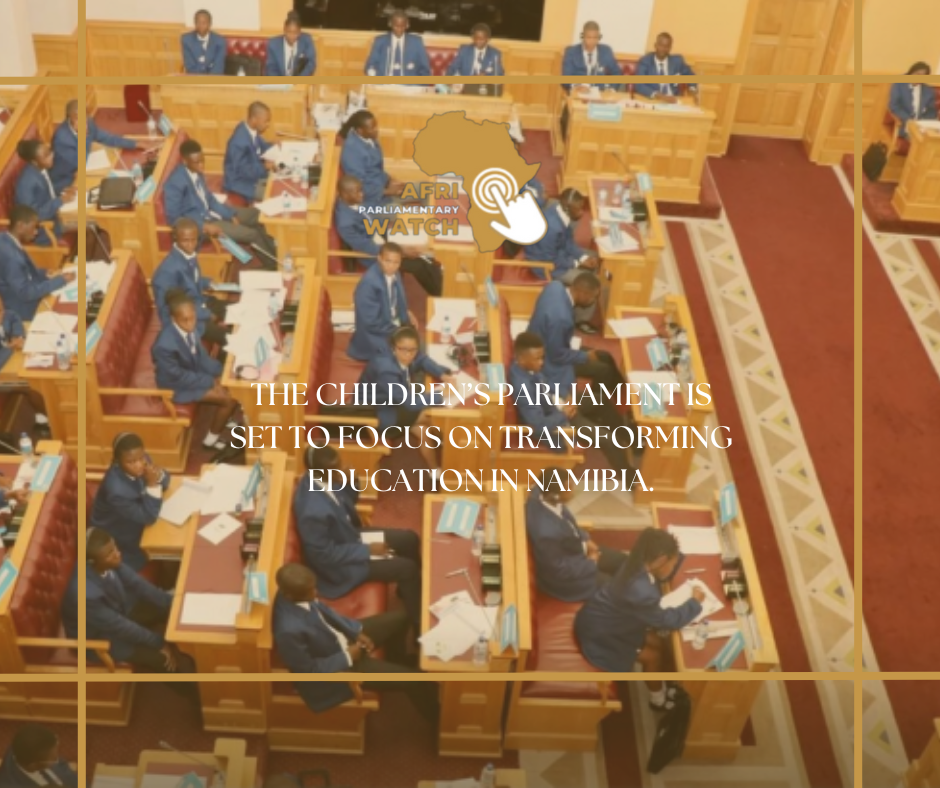
The sixth session of the Children’s Parliament, set to take place from July 12 to 19, will focus on tackling critical educational issues in Namibia.
Established 17 years ago, the Children’s Parliament serves as a platform for young Namibians to engage in the democratic process. It allows them to gain insight into legislative procedures, voice their concerns, and suggest changes to laws affecting their welfare.
This initiative, grounded in the principles of freedom of expression and fundamental human rights outlined in the Namibian Constitution, is a collaborative effort between the Namibian Parliament and the United Nations Children’s Fund (UNICEF). Over 60 students from all 14 regions of Namibia will gather at the National Assembly for the week-long session, themed “Transforming Education in Namibia.”
This year’s session is particularly focused on addressing the educational challenges that have emerged in the wake of the COVID-19 pandemic, such as school dropouts and learner pregnancies.
The Ministry of Education, Arts and Culture reported that over 15,000 students dropped out of school in 2021, with more than 2,000 cases linked to learner pregnancies.
National Assembly Speaker, Professor Peter Katjavivi, emphasized the importance of the Children’s Parliament as a catalyst for change.
“It empowers our youth to participate in democratic processes, ensuring that every child’s voice is heard and their rights are respected,” Katjavivi said.
He highlighted that this initiative reflects Namibia’s commitment to children’s rights through the enactment and ratification of both domestic and international conventions.
During the session, youth representatives will address key educational issues including equitable access, gender-based violence, disability inclusion, governance, and the digital divide worsened by the pandemic.
These discussions are part of Namibia’s broader education reform agenda.
National Assembly spokesperson, Sakeus Kadhikwa, reaffirmed the parliament’s commitment to promoting an inclusive education system.
“This session will not only identify challenges but also propose actionable recommendations to help transform Namibia’s education system,” Kadhikwa stated.
Prior to the session, participants will undergo an intensive induction program and be sworn in for a two-year term as members of the sixth Children’s Parliament, which will include the election of a Speaker and Deputy Speaker.
The session will be officially opened by President Nangolo Mbumba, marking a historic first for the Children’s Parliament.
Past sessions of the Children’s Parliament have led to significant legislative advances. Over 98 motions have been debated and resulted in impactful policies, such as the Learner Pregnancy Policy by the Ministry of Education, Arts and Culture, which enables young pregnant girls to return to school after childbirth and provides a second chance for those who fail Grade 10.
Additionally, contributions from previous sessions were incorporated into the Child Care and Protection Act, including increased grants for Orphans and Vulnerable Children (OVC).
The Children’s Parliament has also been active in global discussions at international forums such as the Inter-Parliamentary Union (IPU).