

Two major investigations — the Parliamentary Ad Hoc Committee into the allegations by Lieutenant General Nhlanhla Mkhwanazi, and the Madlanga Commission of Inquiry into criminality and political interference in the criminal justice system — have emerged from the same set of explosive claims made in July 2025.
While both inquiries stem from Mkhwanazi’s public accusations of corruption, interference, and criminal syndicates within the South African Police Service (SAPS), they differ sharply in how they were established, their mandates, structures, and powers.
1. Establishment and Legal Basis
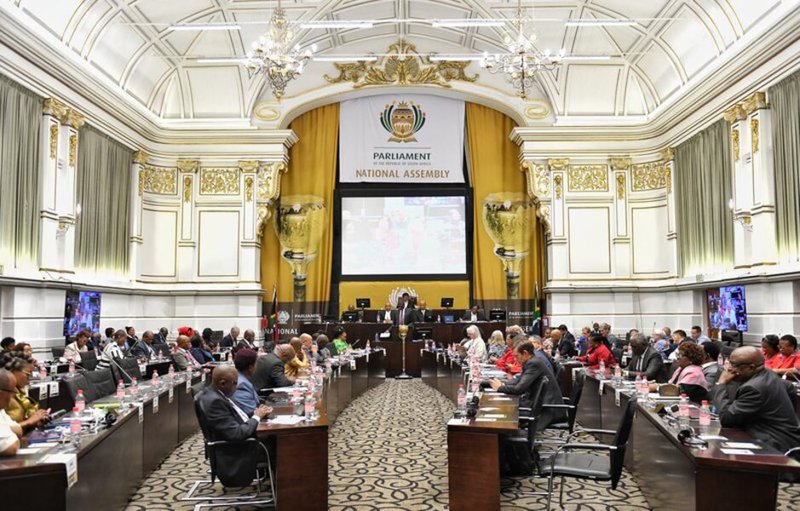
The Parliamentary Ad Hoc Committee was constituted by the National Assembly as a temporary oversight mechanism. It operates under parliamentary rules and focuses on political and administrative accountability.
By contrast, the Madlanga Commission of Inquiry was established by President Cyril Ramaphosa under Section 84(2)(f) of the Constitution and the Commissions Act of 1947. This gives it a judicial character — an independent, quasi-judicial process headed by senior members of the judiciary rather than elected representatives.
2. Scope and Mandate
The Ad Hoc Committee’s work is narrowly focused on verifying the specific allegations made by Mkhwanazi. These include claims of internal SAPS dysfunction, political interference in operational decisions, and the disbandment of specialized task teams.
The Madlanga Commission, meanwhile, takes a much broader view. Its mandate covers systemic corruption, political interference, and organized crime across the entire criminal justice system — from SAPS and metropolitan police departments to the National Prosecuting Authority (NPA), the State Security Agency (SSA), and Correctional Services.
Where the Committee seeks to confirm facts and assign accountability within SAPS, the Commission aims to expose the full extent of criminal and political capture across the justice sector.
3. Composition and Leadership
The Ad Hoc Committee is chaired by Mr. Molapi Soviet Lekganyane (ANC) and includes members from multiple political parties, supported by a technical team and external legal advisers.
The Madlanga Commission, on the other hand, is chaired by Acting Deputy Chief Justice Mbuyiseli Madlanga, with Advocates Sesi Baloyi SC and Sandile Khumalo SC serving as commissioners. Its composition is entirely non-political, relying on legal and judicial expertise rather than parliamentary representation.
4. Powers and Procedures
Parliament’s Ad Hoc Committee operates within the limits of legislative oversight. It can summon witnesses and request documents but cannot override national security classifications or enforce witness protection. Its hearings are generally public, conducted in a structured, sequential format.
The Madlanga Commission has far greater powers under the Commissions Act. It can subpoena witnesses, compel evidence, conduct searches and seizures, and hold closed sessions where confidentiality or safety is at stake. It can also refer cases directly for prosecution or disciplinary action — authority the parliamentary committee does not possess.
5. Timelines and Reporting
Established in August 2025, the Ad Hoc Committee has no fixed deadline. Its findings will be reported to Parliament and may lead to policy recommendations or further oversight actions.
The Madlanga Commission follows a defined schedule: an interim report within three months of its establishment (July 2025) and a final report within six months, unless extended by the President. Its reports go to the President, the Speaker of the National Assembly, and the Chief Justice, with detailed recommendations for prosecution, reform, or suspension where necessary.
6. Outcomes and Broader Impact
The Ad Hoc Committee’s strength lies in political accountability. Its recommendations are not legally binding but can trigger parliamentary debate, influence budgets, and increase pressure for executive action. However, its work has occasionally overlapped or conflicted with the Commission’s schedule — for instance, over the timing of Mkhwanazi’s testimony.
The Madlanga Commission’s impact is potentially more far-reaching. Its findings could lead to criminal prosecutions, disciplinary action, or institutional reform. While its recommendations are also technically non-binding, they carry significant moral and judicial weight due to its independence and procedural rigor.
Complementary but Distinct
Ultimately, the two processes complement each other:
-
The Ad Hoc Committee provides legislative oversight and transparency to the public, ensuring political accountability.
-
The Madlanga Commission delivers a judicial deep dive into systemic corruption, designed to inform executive decisions and long-term reform.
Although concerns about duplication have surfaced, both bodies continue to operate independently — reflecting South Africa’s multi-layered approach to restoring credibility and integrity within its criminal justice system.